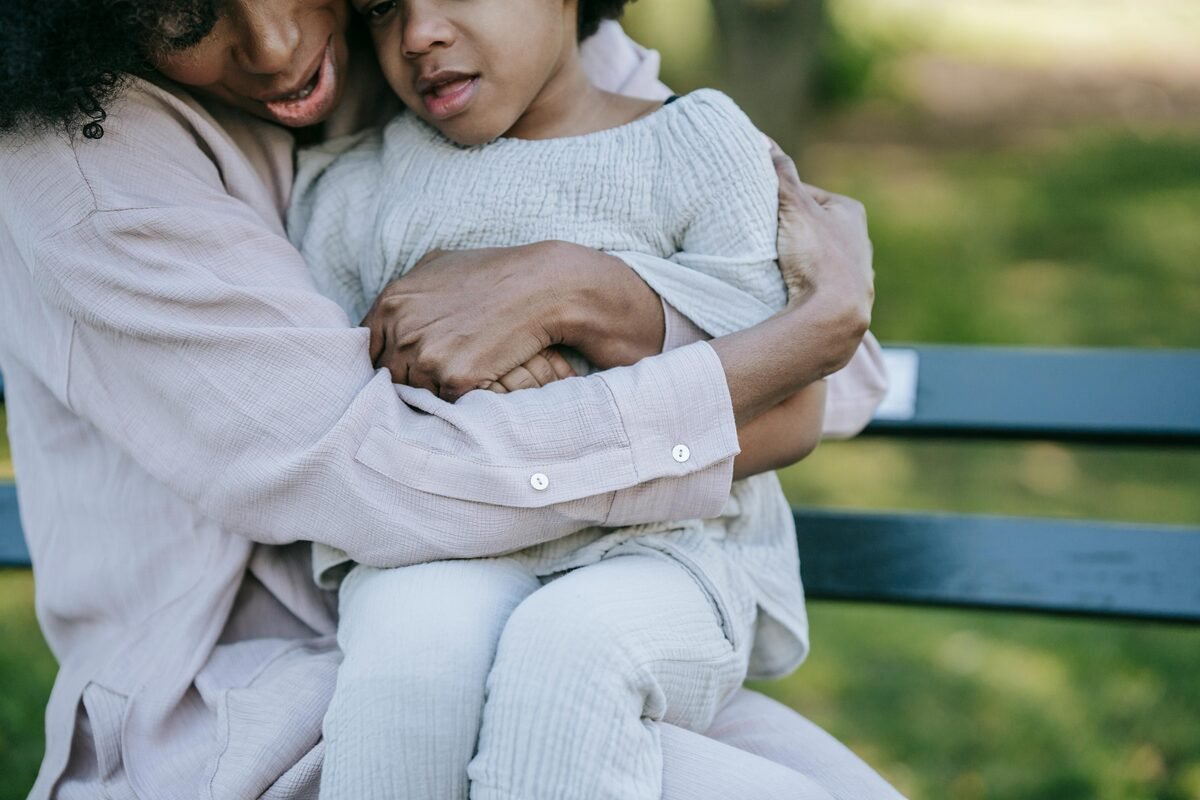
August has this particular quality to it. The summer stretching thin, back-to-school lists appearing in shop windows, everyone sensing without quite naming it that something is about to change. Children can feel it. Parents can feel it too, sometimes as relief, sometimes as something more complicated.
It's the kind of month when a lot of parents find themselves wanting to do something meaningful before the routine swallows everything again. A trip, a conversation, a gesture. Something that counts.
I want to offer a different frame. The things that build secure attachment in children are not the big gestures. They never were. They're small, ordinary, often unglamorous moments, and they're already happening in your house, more than you probably realize.
What follows isn't a checklist. It's more like a lens. A way of seeing what's already there, and understanding why it matters.
1. Staying in the room when the feeling is big
Your child is upset. Really upset. Crying hard, or furious, or in that particular kind of spiral that seems to feed itself. Everything in you wants to fix it, redirect it, or simply leave the room until it's over.
When you stay (even without saying much, even while feeling uncomfortable yourself) you are teaching your child something their nervous system will remember long after the specifics of the moment are gone: my feelings don't push people away. I don't have to manage this alone. It's safe to fall apart a little.
You don't need the right words. You don't need to be calm. You just need to not leave. That's the whole thing.
2. Noticing what they didn't say out loud
A child comes home quiet. Or snappy. Or wants to be held more than usual and can't tell you why. And instead of asking a direct question they can't answer (what's wrong, what happened, why are you being like this) you simply say: you seem like you're carrying something today. And leave space.
That moment of being seen without having to explain is one of the most regulating experiences a child can have. It tells them that you are paying attention to them, not just their behavior. That there's a person in the room who notices.
Children who grow up being noticed in this way develop a different relationship with their own inner life. They're more likely to trust their own perceptions. More likely to reach out when something is wrong. Because someone showed them, consistently, that what's going on inside them is worth attending to.
3. Coming back after a hard moment
You lost your temper. Or you were short with them in a way you regret. Or you were simply absent. Distracted and elsewhere in a way they felt, even if you didn't say anything wrong.
And then you came back. You sat down near them, or you knocked on their door, or you caught their eye at dinner and said something small and honest: earlier wasn't my best. I'm sorry.
This moment, the return, is arguably more important for secure attachment than never losing your temper in the first place. Because it teaches a truth that perfect parenting never could: relationships break and repair. Disconnection isn't permanent. Love doesn't disappear when things go wrong.
That's not a small lesson. That's the foundation of every relationship they'll have for the rest of their life.
4. Being slightly more regulated than they are
This one is so quiet it almost doesn't look like anything.
Your child is dysregulated. Loud, or inconsolable, or rigid with frustration. And you are not perfectly calm, but you are slightly calmer than they are. Your voice is a notch lower. Your body is a little more still. You breathe a bit more slowly than the situation seems to demand.
Children's nervous systems are constantly synchronising with the adults around them. This is not a metaphor. It is biological, operating below the level of conscious thought. Your regulated state becomes an anchor their nervous system can orient toward. They begin, without knowing why, to settle.
You don't have to be calm. You just have to be slightly calmer. Even 20% calmer than the storm is enough. That small difference is co-regulation in action, and it is building neural pathways in your child that will outlast anything you ever say to them.
5. Letting them see you struggle with something
I know this one isn't on most lists. But I think it belongs here.
When a child sees their parent navigate something genuinely hard (a difficult phone call, a frustrating day, a moment of real sadness) and watches that parent manage it without falling apart or pretending it isn't happening, they learn something irreplaceable: hard feelings are survivable. Adults have them too. You don't have to perform being fine.
Not oversharing. Not making the child responsible for your emotional state. Just being visibly, honestly human every now and then (today was hard for me, I'm feeling a bit flat tonight) and letting that be okay.
Children who never see parents struggle often grow up feeling profoundly alone in their own difficulties. Like everyone else has figured something out that they haven't. Watching you navigate imperfection with honesty gives them permission to do the same.
6. The transition moments you treat as real
The goodbye in the morning. The pickup after school. The few minutes after they come home before anyone has asked them to do anything yet.
These moments are tiny. They're also, neurologically, some of the most significant. Transitions are when the nervous system is most open and most vulnerable. Moving between one context and another, recalibrating, looking for signals about whether the new environment is safe.
A parent who makes eye contact at pickup, who asks nothing for the first five minutes, who offers something warm without interrogating: that parent is anchoring their child's nervous system at exactly the moment it most needs anchoring. The child doesn't register this as a strategy. They register it as: I am welcome here. I can land.
That feeling, of being able to land somewhere, is, quietly, the definition of secure attachment.
7. The repair your child witnesses you making with yourself
This last one is less visible but I think it might be the most powerful of all.
When you catch yourself after a reactive moment and you don't spiral into shame (when you say, internally or aloud, that was hard, I'm going to try again) your child witnesses something that most adults never had modeled for them.
Self-compassion in action. The capacity to be imperfect and not be destroyed by it. The willingness to keep showing up without requiring perfection of yourself first.
Children absorb this. Not consciously. But over hundreds of small moments of watching you treat yourself with basic decency after a hard day or a wrong call, they are building their own internal relationship with failure, with imperfection, with what it means to try.
You are not just their parent. You are the first model they have of what it looks like to be a person navigating this. Make that as honest, as forgiving, as human as you can.
None of these moments require a special occasion. None of them require you to have resolved your own history first, or to have become someone other than who you are. They're already available to you, in the ordinary texture of your days, especially in the weeks before the calendar fills up again and the quiet of August becomes something you're looking back at.
Secure attachment is built in the accumulation of small moments where your child learns: I am seen. I am safe. And when things break, we come back to each other.
That's it. That's the whole project.